

What is hip joint preservation surgery?
Hip joint preservation surgeries treat hip problems while keeping the natural joint, to avoid or delay the need for total hip replacement. They are used for conditions such as femoroacetabular impingement (FAI), hip dysplasia, labral tears and other structural problems of the hip.
Treatment begins with a thorough assessment of your symptoms, medical history and imaging, including X-rays, MRI and CT scans, to find the cause of your hip pain. Surgery may then be done arthroscopically (key hole surgery through small cuts with a camera), as an open operation, or as a combination of both.
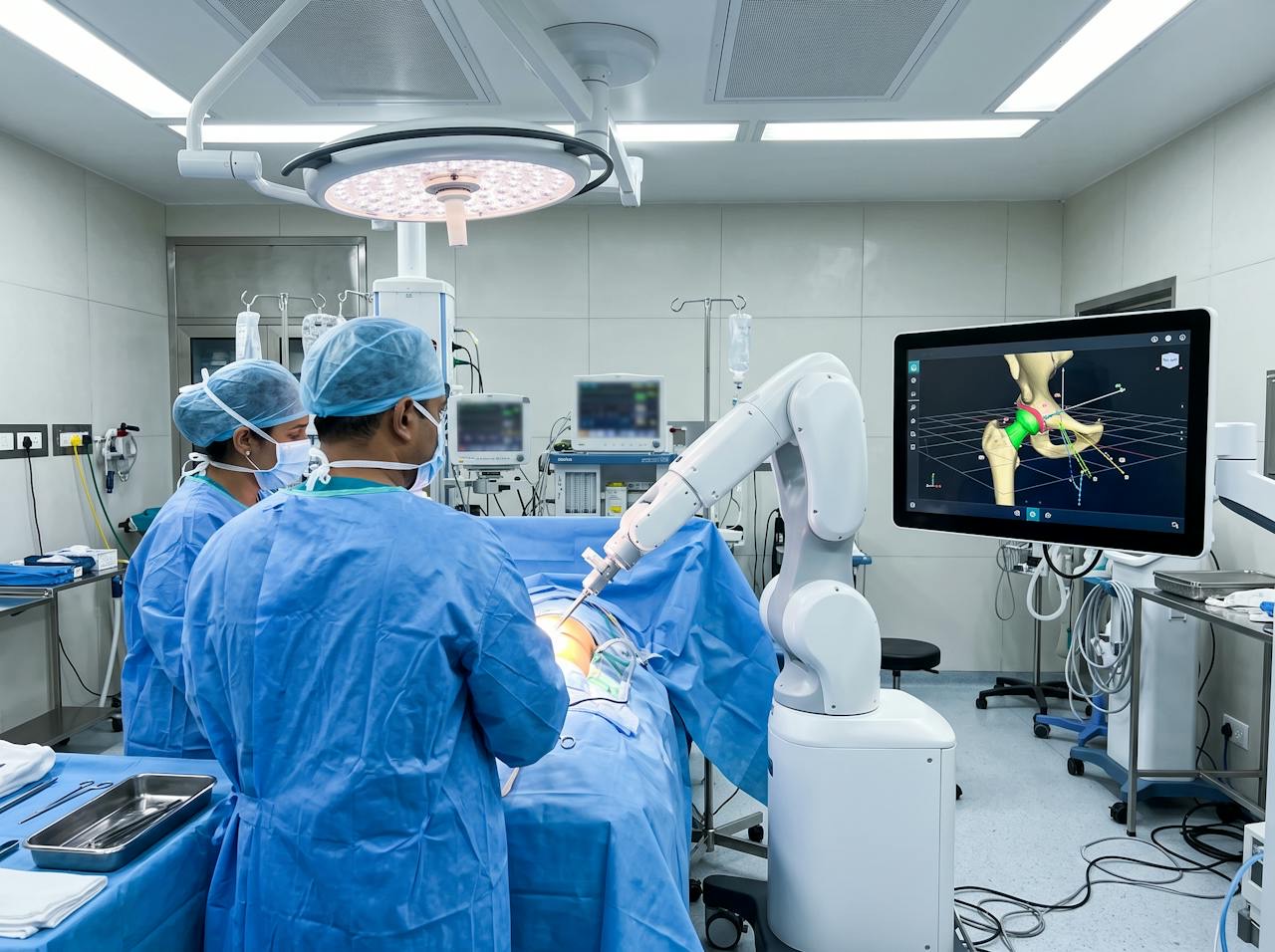
During surgery, Dr. Arun can treat bone spurs, cartilage damage, labral tears and socket abnormalities. 3D imaging and computer-assisted planning help make these procedures precise, and biological treatments may be used to support healing. Hip preservation is offered at Renova Hospital, Kompally, for patients across Secunderabad and Hyderabad.
Who can benefit from hip preservation?
Hip preservation surgery is considered for:
It may suit you if you have:
- Groin pain when sitting, bending or twisting
- A clicking, catching or locking feeling in the hip
- Hip pain during or after sport
- Stiffness and reduced hip movement
- Early changes on X-ray or MRI
- A wish to keep your own hip for as long as possible
Your hip treatment pathway
Preservation sits between non-surgical care and hip replacement. Dr. Arun recommends the least invasive option that can work for you.
Types of hip preservation surgery
Dr. Arun chooses the procedure, or combination of procedures, that fits the problem in your hip:
- Detailed evaluation. X-rays, MRI and CT scans show the shape of your hip and the extent of any damage, so the plan is personal to you.
- Hip arthroscopy. Through small cuts, a camera and fine instruments are used to repair labral tears, trim bone spurs and treat cartilage damage.
- Open hip preservation surgery. For larger deformities or socket abnormalities, such as dysplasia, an open operation can reshape or realign the joint.
- Core decompression for early AVN. In early avascular necrosis, relieving pressure inside the ball of the hip may help protect it from collapse.
- Biological treatments. Biological and regenerative treatments may be used alongside surgery to support tissue healing.
Benefits of hip preservation surgery
Recovery after hip preservation surgery
Recovery depends on the procedure. Key hole procedures usually allow a quicker return to daily life, while open surgery needs a longer period of protected walking.
- First days Protected walking You walk with crutches or a walker and begin gentle exercises.
- [First 4 to 6 weeks] Healing phase Weight-bearing increases as the hip heals.
- [Months 2 to 3] Strength and movement Physiotherapy rebuilds strength, balance and range of movement.
- [Months 4 to 6] Back to activity Return to sport and demanding activity when Dr. Arun advises.
Before you decide
- Timing matters. Preservation works best before arthritis becomes advanced or the hip collapses.
- Not every hip can be preserved. Dr. Arun explains honestly whether preservation or replacement is better for you.
- Rehabilitation commitment. Following your physiotherapy programme makes a big difference to the result.