
Shoulder joint replacement in Secunderabad
The shoulder is a complex joint that gives us a wide range of movement for everyday tasks, work and sport. When it is damaged by arthritis or a serious injury, the result can be constant pain, restricted movement and a much poorer quality of life.
Shoulder joint replacement, or shoulder arthroplasty, replaces the damaged parts of the shoulder with artificial components to relieve pain, restore function and improve quality of life. It is used for osteoarthritis, rheumatoid arthritis, large rotator cuff tears with arthritis and severe fractures of the upper arm bone, when other treatments have not helped.
Not every painful shoulder needs replacement. Many patients are treated for frozen shoulder, rotator cuff tears and dislocations with physiotherapy, targeted injections or key hole surgery. Dr. Arun Dev offers the full range at Renova Hospital, Kompally, for patients across Secunderabad and Hyderabad.
When is shoulder replacement needed?
Shoulder replacement is used to treat:
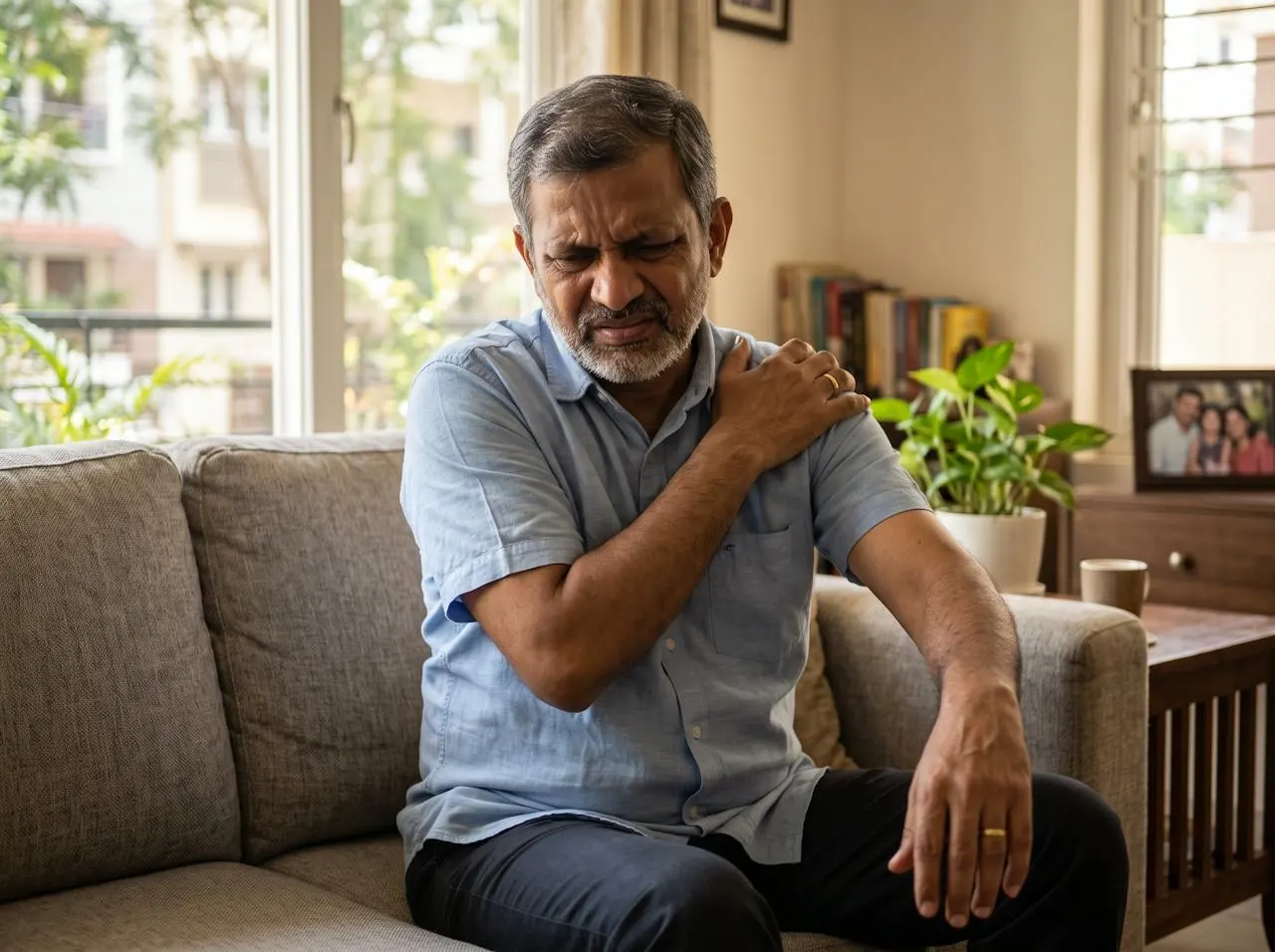
See a shoulder specialist if you have:
- Shoulder pain that wakes you at night
- Pain and weakness lifting your arm
- Stiffness reaching overhead or behind your back
- Grinding or clicking in the shoulder
- Difficulty dressing, combing hair or lifting objects
- Pain that stays despite medicines and physiotherapy
Treatment options for shoulder pain
The right treatment depends on the cause of your pain. Dr. Arun starts with the simplest option that can work.
The shoulder replacement procedure
Shoulder replacement is usually done under general anaesthesia. The main steps are:
- Incision. A cut is made over the front of the shoulder to reach the joint.
- Preparing the joint. The damaged socket (glenoid) and the head of the upper arm bone (humerus) are carefully removed.
- Placing the implants. A metal stem and ball are fixed in the upper arm bone and a socket component is fitted to the shoulder blade.
- Checking movement. The new joint is checked for smooth, stable movement before closing.
- Closing the wound. The wound is closed with stitches or staples, and the arm is supported in a sling.
Benefits of shoulder replacement
Recovery after shoulder replacement
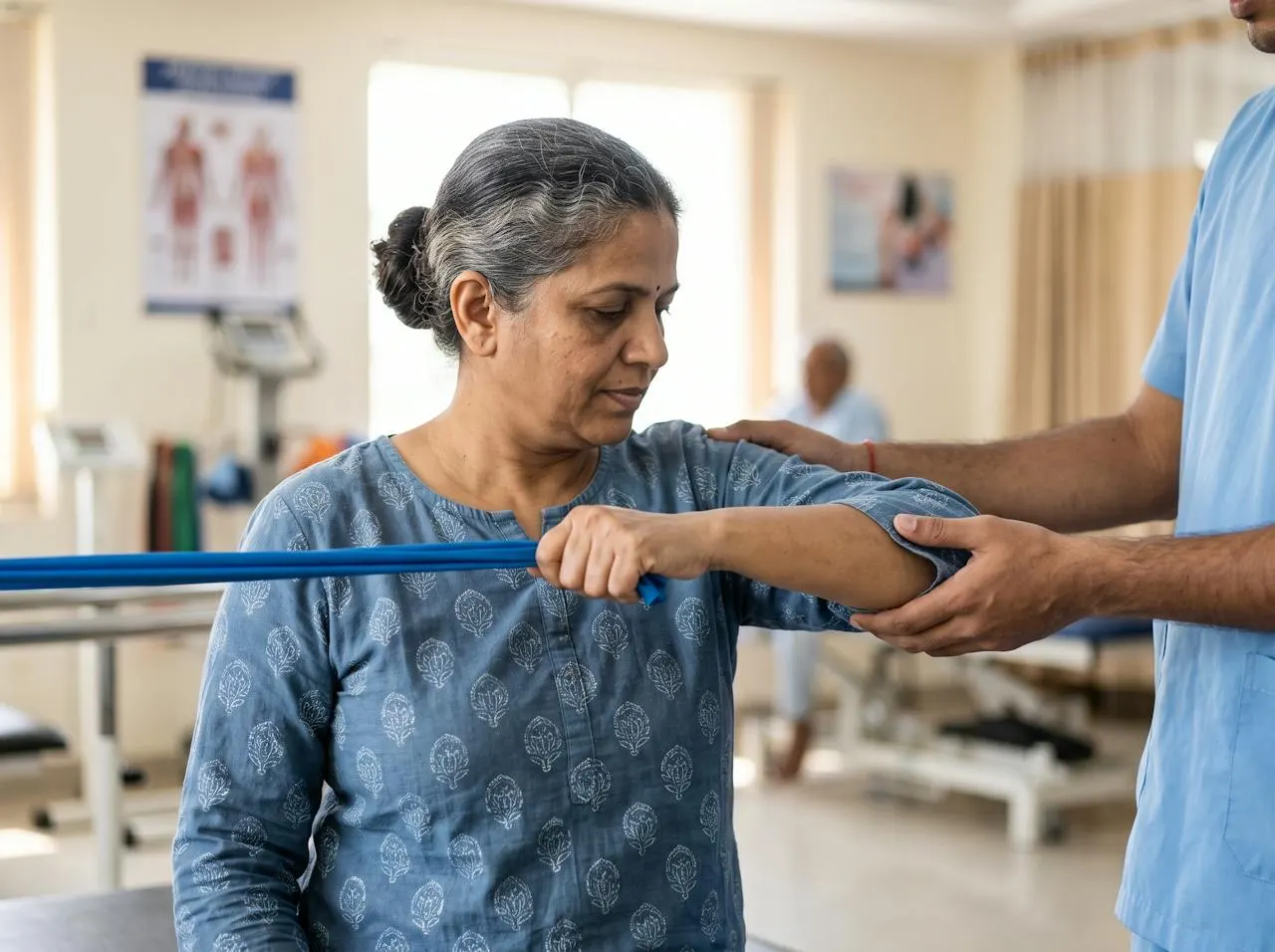
Physiotherapy starts soon after surgery to restore movement, build strength and improve stability, with pain managed through medicines and cold therapy. Most patients regain shoulder function and return to regular activities within a few months.
- In hospital Sling and gentle movement Your arm rests in a sling and gentle, guided exercises begin.
- Protected movement Range of movement improves step by step while the shoulder heals.
- Building strength Strengthening exercises help with lifting and reaching.
- Back to routine Most people return to normal daily activities, with a review by Dr. Arun.
Before you decide
- Realistic expectations. Shoulder replacement greatly reduces pain and improves function, though full movement may not always return.
- Rehabilitation commitment. Active physiotherapy and lifestyle changes are essential for the best result.
- Explore other options. Many shoulder problems improve with injections or key hole surgery; Dr. Arun explains which suits you.