

Understanding shoulder instability and dislocation
Shoulder instability happens when the ball of the upper arm bone (humerus) is forced out of the shallow shoulder socket (glenoid), either partly (subluxation) or completely (dislocation). It can follow a fall or a blow to the shoulder, repeated overhead movements in sport, or naturally loose joints, and causes pain, weakness and a feeling that the shoulder is loose.
The shoulder is a ball-and-socket joint made up of the humerus, the shoulder blade (scapula) and the collarbone (clavicle). A capsule of ligaments, tendons and muscles holds the ball in place. Instability can be anterior (the ball slips out of the front of the socket, the most common type) or posterior (out of the back), and traumatic or atraumatic depending on the cause.
Many first-time dislocations are treated with rest, ice and physiotherapy. When the shoulder keeps dislocating or slipping, arthroscopic surgery can repair the damage and stabilise the joint. Dr. Arun Dev assesses every patient with an examination and imaging at Renova Hospital, Kompally, for patients across Secunderabad and Hyderabad.
Signs and causes of shoulder instability
Shoulder instability is often caused by:
See a shoulder specialist if you have:
- A shoulder that has dislocated more than once
- A feeling that the shoulder slips or is loose
- Fear of lifting the arm in certain positions
- Pain and weakness after a dislocation
- Clicking or catching in the shoulder
- Difficulty returning to sport or work
Treatment options for shoulder instability
Not every unstable shoulder needs surgery. Treatment depends on how often it dislocates, your activity level and the damage on scans.
Arthroscopic surgery for an unstable shoulder
Through small cuts, Dr. Arun uses a camera and fine instruments to repair and stabilise the joint. The technique depends on your shoulder:
- Examination and imaging. A physical examination, X-rays and MRI or CT confirm the diagnosis and the extent of the damage.
- Bankart repair. The torn labrum is reattached to the rim of the shoulder socket with sutures and small anchors.
- Capsular shift. A stretched shoulder capsule is tightened and repositioned to improve stability.
- Remplissage. A defect in the ball of the humerus is filled with soft tissue so it cannot catch on the socket and dislocate.
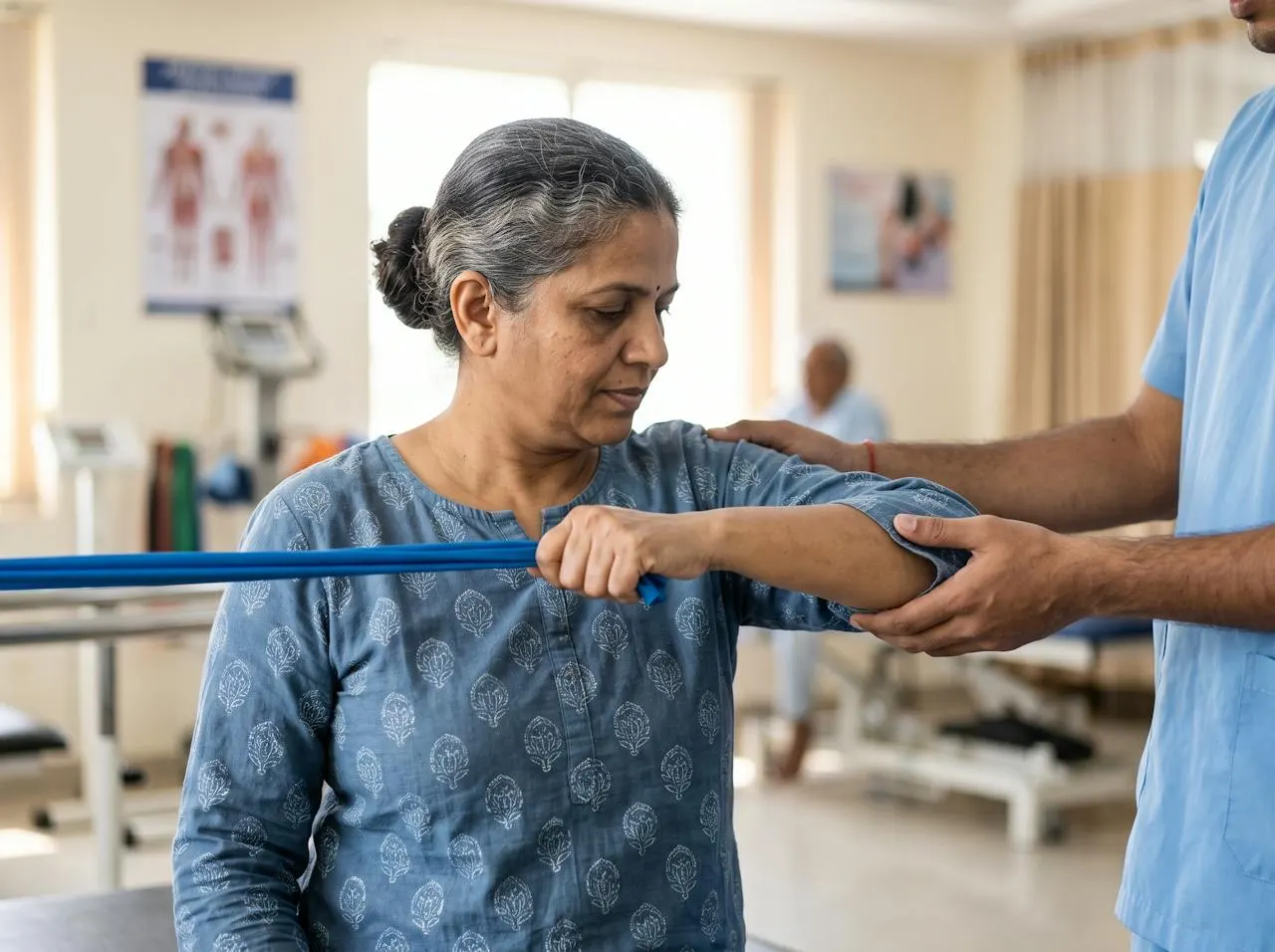
- Sling and rehabilitation. The arm is supported in a sling and a guided physiotherapy programme begins.
Benefits of arthroscopic stabilisation
Recovery after shoulder stabilisation
Arthroscopic stabilisation is often done as a day-care or short-stay procedure, and most patients return to normal activities within a few weeks. Recovery varies with the extent of surgery and individual healing.
- First days Sling and rest The arm rests in a sling, with gentle hand and elbow movement.
- Protected movement Guided exercises gradually restore movement while the repair heals.
- Strength and control Strengthening exercises build stability around the shoulder.
- Return to sport Contact and overhead sport resume when Dr. Arun confirms the shoulder is ready.
Before you decide
- Repeated dislocations cause damage. Each dislocation can damage the labrum, cartilage and bone, so early assessment helps.
- Bone loss changes the plan. If scans show significant bone loss, arthroscopic repair alone may not be enough.
- Follow the rehabilitation plan. Protecting the repair early and strengthening later gives the best result.