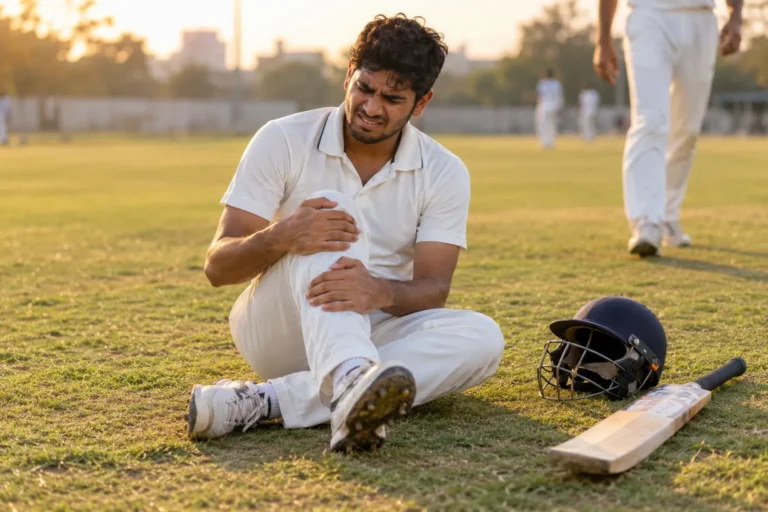
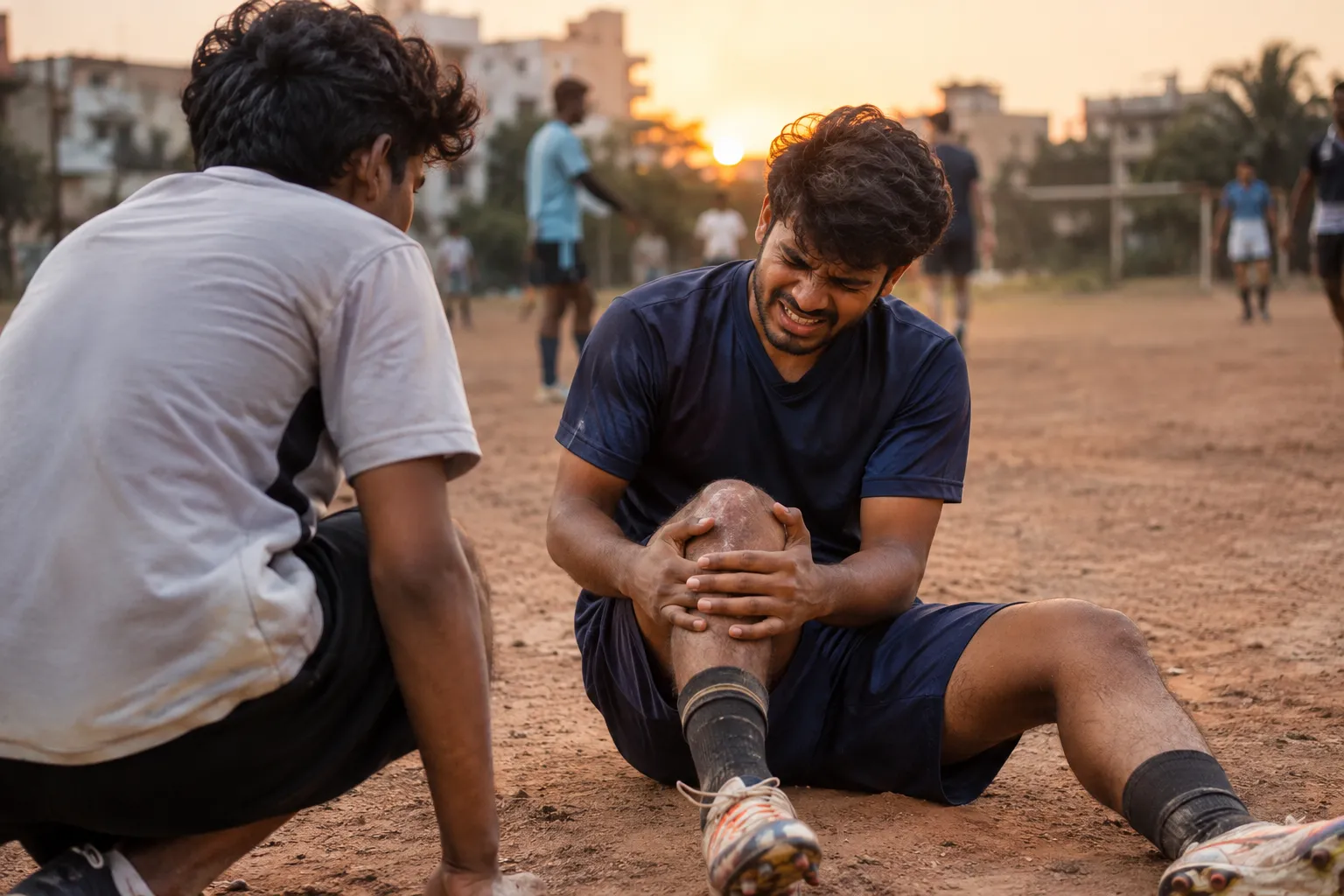
A sudden turn in a football match, a bad landing in kabaddi, or a fall from a two-wheeler. Many patients with an ACL tear remember feeling a “pop” in the knee, followed by swelling within hours. Then the MRI report arrives, and the first question is, “Do I need an operation?”
The honest answer is: not always. An ACL tear does not automatically mean surgery. The decision depends on whether your knee feels stable, what you want to do with it, and what else was injured. This guide explains how that decision is made.
What does the ACL do?
The anterior cruciate ligament (ACL) is a strong band in the centre of the knee that joins the thigh bone to the shin bone. It stops the shin bone from sliding forward and helps control twisting. You may not need it much for walking in a straight line, but you depend on it when you turn, stop suddenly, jump or land.
Signs of an ACL tear
- A pop or tearing feeling at the time of injury
- Swelling that builds up within a few hours
- Being unable to carry on playing
- Pain and difficulty bending or straightening the knee
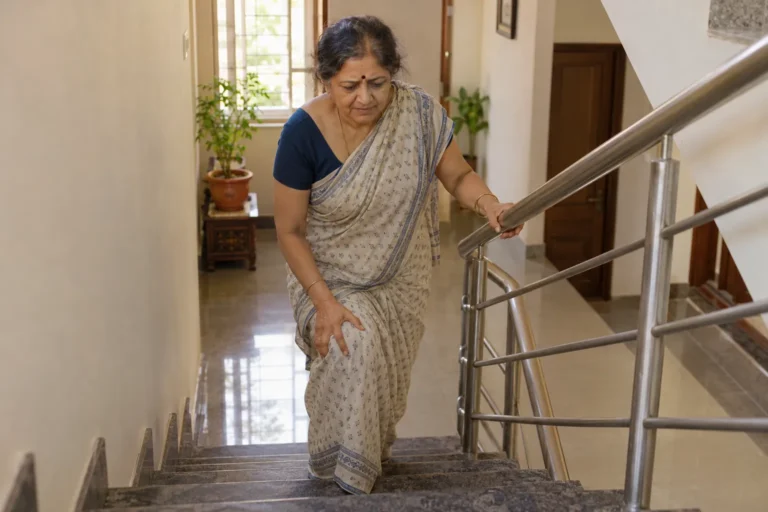
- Later, a feeling that the knee shifts or gives way, especially when turning or on stairs
Once the first pain and swelling settle, many people think the knee has recovered. The real test comes when they turn quickly or return to sport, and the knee gives way.
How an ACL tear is diagnosed
A careful examination is the most important step. Specific tests check how far the shin bone moves forward and whether the knee slips when it rotates. An X-ray checks for a fracture. An MRI confirms the tear and, just as importantly, shows whether the meniscus, cartilage or other ligaments have also been injured.
Does a torn ACL heal on its own?
A complete ACL tear usually does not heal back into a working ligament. However, some people’s knees stay stable without it, because strong thigh and hip muscles can do part of the job. Some partial tears also settle well with rehabilitation. This is why physiotherapy is a real option for some patients.
Who may manage without surgery?
A structured programme of physiotherapy may be the right choice if:
- You have a partial tear and the knee feels stable
- Your knee does not give way in daily life
- You do not play sports with turning and jumping, or you are willing to stop them
- Your daily activity is mainly walking, cycling, swimming or light gym work
- There is no meniscus tear that needs repair
Research has shown that some active adults who start with proper rehabilitation do well and do not need surgery, and some go on to have surgery later if the knee stays unstable. Rehabilitation first does not close the door to surgery. It does need to be done properly, usually over several months, and the knee must be reviewed along the way.
Who is usually better off with ACL surgery?
- The knee keeps giving way, even in daily activities or after rehabilitation.
- You want to return to sports with turning and jumping, such as cricket, football, kabaddi, badminton or basketball.
- You also have a repairable meniscus tear. Saving the meniscus protects the knee. Read our guide on meniscus tears.
- More than one ligament is injured.
- Your work needs a stable knee, such as police, defence, or jobs involving ladders and heavy loads.
Children and teenagers need special care, because their growth plates are still open. An unstable knee in a young person should always be assessed by a specialist.
What happens if you ignore an unstable knee?
Each time the knee gives way, the joint surfaces can shift and pinch the meniscus and cartilage. Over the years, this repeated damage can raise the risk of early arthritis. A knee that stays stable is less of a worry. A knee that keeps giving way should not be ignored, even if it feels fine between episodes.
Is ACL surgery urgent?
Usually not. ACL surgery is planned, and it is commonly done after the swelling has settled and the knee has regained good movement. A few weeks of physiotherapy before surgery can help recovery after it. The exception is a locked knee that cannot straighten, which may mean a large meniscus tear and needs earlier attention.
What happens in ACL reconstruction?
A torn ACL is generally not stitched back together. Instead, it is replaced with a graft, usually taken from your own hamstring or patellar tendon. Dr. Arun Dev performs this through key hole surgery, with a small camera and fine instruments passed through small cuts around the knee. Any meniscus or cartilage injury can be treated during the same operation. Learn more on our ACL surgery page.
What recovery looks like
Surgery is only half the treatment. The other half is rehabilitation, and it decides how well the knee performs.
| Stage | What usually happens |
| First days | Walking with support, controlling swelling, getting the knee fully straight |
| First 6 weeks | Regaining bending and thigh strength, returning to daily activities |
| Months 3 to 4 | Stronger gym work, balance training, and light jogging when advised |
| Around 9 months | Return to turning and contact sport, after strength and movement tests |
Timelines differ from person to person, and repairing a meniscus at the same time can slow the early stages. Returning to sport too early is one of the main reasons for a second injury, so the decision should be based on how strong and stable the knee is, not only on the calendar. Our sports injury treatment page explains how the return to play is planned.
Frequently asked questions
Can I walk with a torn ACL?
Often yes, once the swelling settles. Being able to walk does not mean the knee is stable. Turning and sudden stops are what test the ACL, so have the knee examined before returning to sport.
Is a partial ACL tear treated differently?
Many partial tears improve with physiotherapy if the knee feels stable. If the knee keeps giving way, or you want to return to demanding sport, reconstruction may still be advised.
How long after an ACL injury can surgery be done?
There is no fixed date. It is usually planned once swelling has settled and movement has returned. Surgery can also be done months or years later if the knee stays unstable, though repeated giving way can damage the meniscus in the meantime.
Will my knee be normal after ACL surgery?
Most patients regain a stable knee and return to their daily activities, and many return to sport. Results depend on the injury, the surgery and how well you follow rehabilitation.
Do I need a knee brace for an ACL tear?
A brace can give short-term support, but it does not heal the ligament. Strength and balance training matter more. Your doctor will advise whether a brace is useful for you.
See a knee ligament specialist in Kompally, Secunderabad
If your knee swelled after a twist, or it no longer feels reliable, an early assessment can show whether you need physiotherapy, surgery or simply time. Dr. Arun Dev, a shoulder and knee arthroscopy surgeon, sees patients at Renova Hospital, Medchal Road, Kompally, Monday to Saturday, 9 am to 8 pm. Patients come from Secunderabad, Alwal, Bowenpally, Suchitra and across north Hyderabad. Call or WhatsApp +91 86187 27200 or book an appointment online.
This article is general information and is not a substitute for a consultation. Please see a doctor about your own condition.