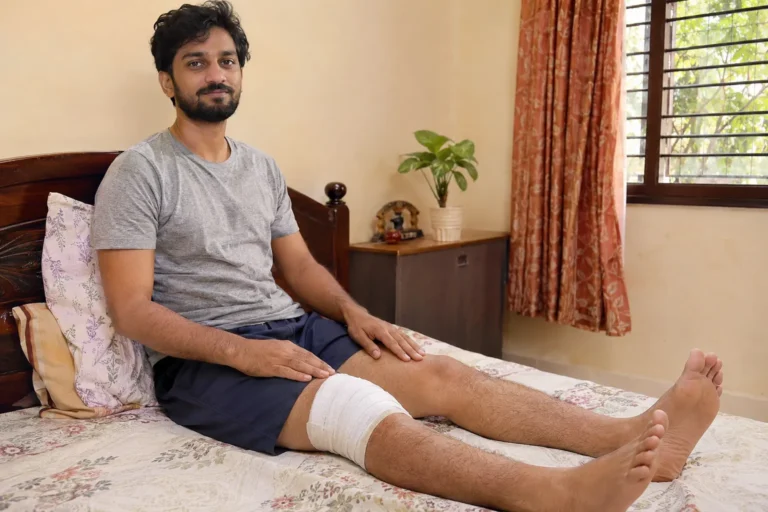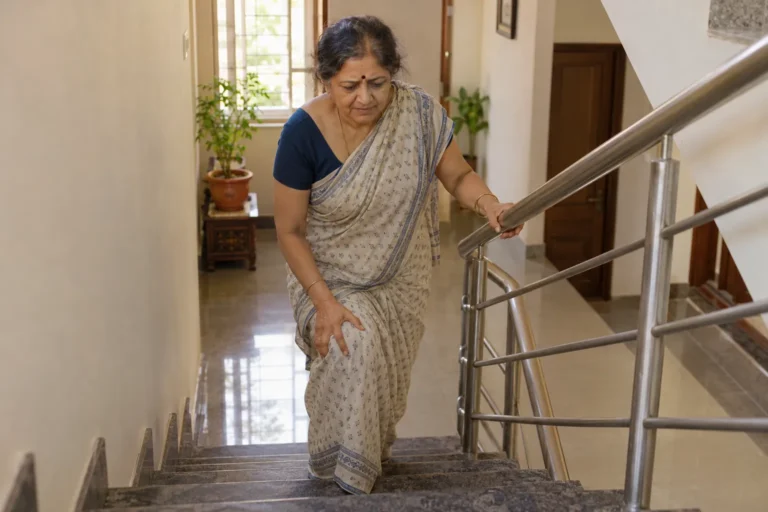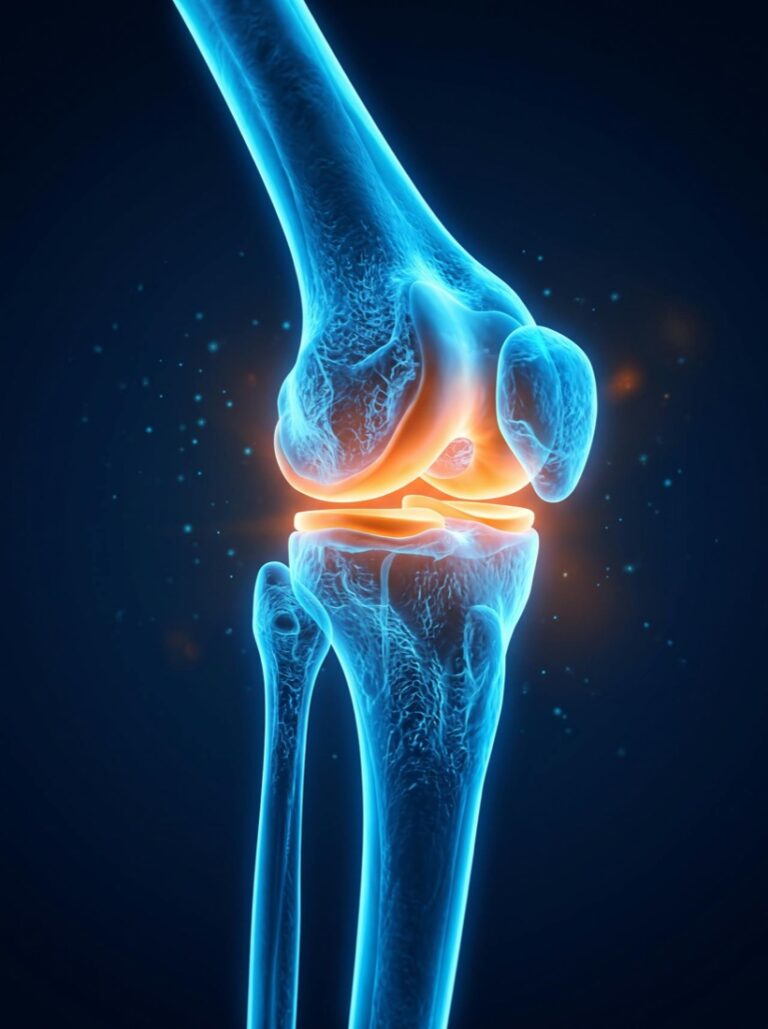
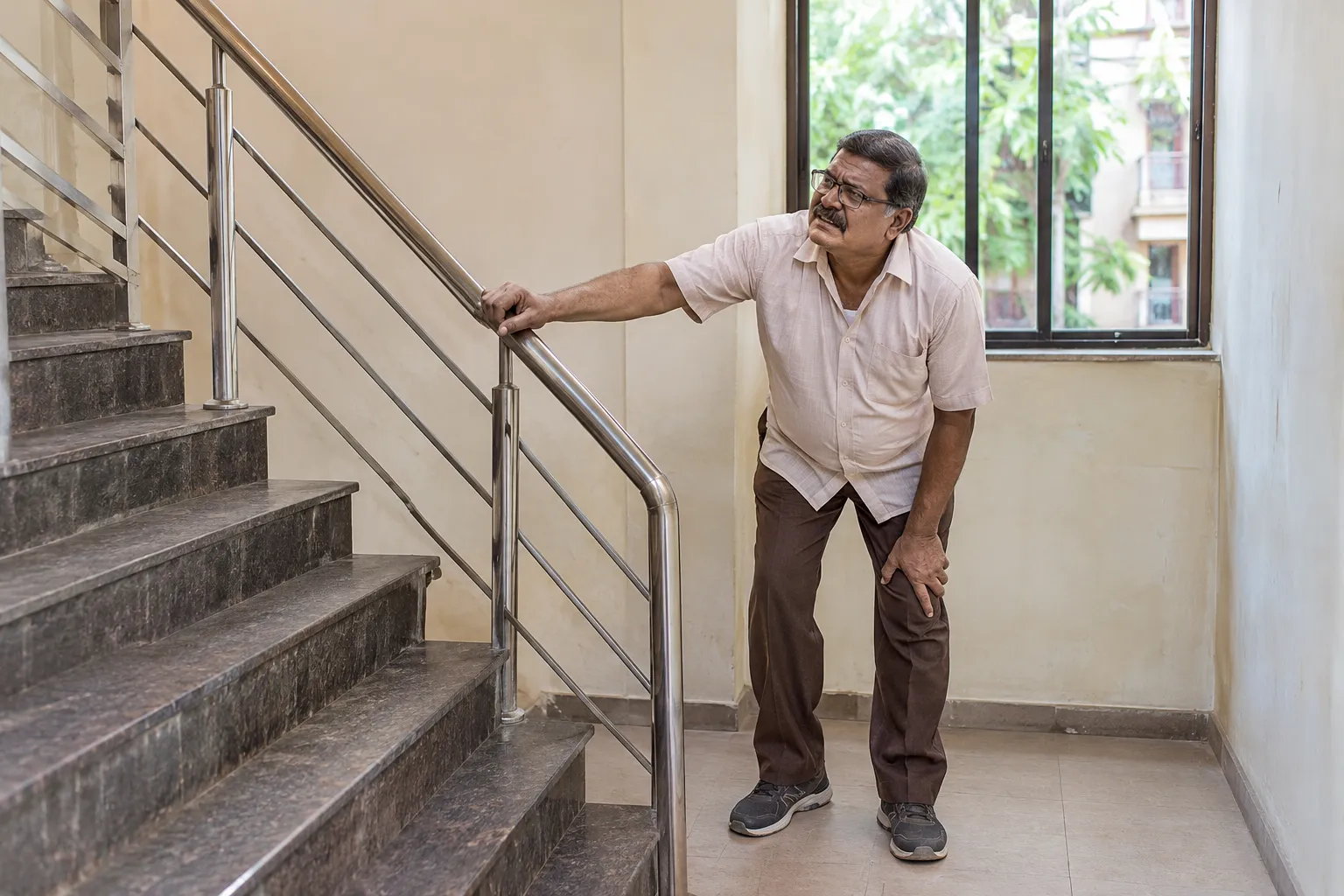
Many people first notice a knee problem on the stairs. Walking on flat ground feels fine, but climbing to the first floor, coming down from the terrace or using the steps at a temple or metro station brings on pain. Stairs put several times your body weight through the knee, so they show up a problem long before it affects ordinary walking.
The good news is that most causes of stair pain are treatable, and many improve without surgery. This guide explains what the pain may mean and what you can do about it.
Pain going up versus coming down
Where and when it hurts gives useful clues.
- Pain at the front of the knee, especially coming down, often comes from the joint behind the kneecap.
- Pain on the inner side of the knee, with stiffness in the morning, is common in early arthritis.
- Sharp pain with catching or locking after a twist may point to a meniscus tear.
- Pain with the knee giving way can mean a ligament injury or weak thigh muscles.
These are only clues. An examination is needed to know the cause.
Common causes
Kneecap pain (patellofemoral pain)
The kneecap glides in a groove at the end of the thigh bone. If the thigh and hip muscles are weak or tight, the kneecap can press unevenly and hurt on stairs, squatting or sitting for long. It is common in young adults, runners and people who have recently become less active. Strengthening exercises usually help a great deal.
Knee osteoarthritis
As the cartilage wears, stairs are often the first activity to become difficult. Pain may come with stiffness after rest and swelling after a busy day. Early arthritis responds well to exercise, weight control and other treatments. Our article on when knee replacement is needed explains the later stages.
Meniscus tear
A tear in the cartilage pad of the knee can cause pain on one side, catching and swelling, especially on stairs and when turning. Read our guide on meniscus tears.
Tendon irritation
The tendons around the kneecap can become sore with sudden increases in activity, such as starting a new sport or a long trek.
What you can do at home
- Take the stairs one step at a time. Lead with the stronger leg going up and the painful leg going down, and use the railing.
- Strengthen the thigh muscles. Simple exercises such as tightening the thigh muscle and straight-leg raises take load off the knee.
- Keep moving. Walking on flat ground, cycling and swimming keep the joint healthy. Complete rest usually makes stiffness worse.
- Watch your weight. Even a small weight loss reduces the load on the knee with every step.
- Ice after activity if the knee feels warm or swollen.
When to see a doctor
Book an assessment if:
- Stair pain has lasted more than a few weeks despite these steps
- The knee swells, locks or gives way
- Pain wakes you at night
- You started limping, or avoid stairs altogether
- The pain began after a fall or a twist
Seek urgent care if the knee is hot, red and swollen with fever, or if you cannot bear weight after an injury.
How it is treated
Treatment depends on the cause. Most patients start with a structured physiotherapy programme, activity changes and short courses of medicine. Some benefit from injections. When a tear or ligament injury needs repair, key hole surgery may be advised, and for worn knees there are options such as knee preservation surgery and joint replacement. A careful examination, and an X-ray or MRI when needed, shows which path fits you.
Frequently asked questions
Is knee pain on stairs always arthritis?
No. In younger people it is more often kneecap pain or a tendon problem. Arthritis becomes more likely after 45 to 50, but an examination is needed to be sure.
Should I stop using stairs?
Not completely. Use the railing and go one step at a time, but keep the knee active. Avoiding stairs altogether can weaken the muscles that protect the knee.
Do I need an MRI for knee pain on stairs?
Often not. Many causes can be diagnosed with an examination and X-ray. An MRI helps when a tear is suspected or the pain does not improve.
Can exercise really fix stair pain?
For kneecap pain and early arthritis, strengthening exercises are among the most effective treatments. They need to be done regularly for several weeks to work.
See a knee specialist in Kompally, Secunderabad
If stairs have become a daily struggle, an examination can find the cause and the right treatment. Dr. Arun Dev treats knee problems at Renova Hospital, Medchal Road, Kompally, for patients from Secunderabad, Alwal, Bowenpally, Suchitra and across north Hyderabad. OPD runs Monday to Saturday, 9 am to 8 pm. Call or WhatsApp +91 86187 27200 or book an appointment online.
This article is general information and is not a substitute for a consultation. Please see a doctor about your own condition.